[CVPR 2025] OmniManip: Towards General Robotic Manipulation via Object-Centric Interaction Primitives as Spatial Constraints
Movitation
- 최근 LLM, VLM을 robotics에 사용하여 semantic reasoning같은 high-level task planning에 활용하는 연구가 진행됨. 다만, VLM은 2d 데이터에서만 학습이 되었기 때문에 precise, low-level manipulation tasks에 필요한 3D spatial understanding 능력이 떨어짐
- 따라서 최근에는 VLM을 finetune해서 VLA로 전환하는 연구가 진행됨
- finetune을 위한 diverse, high-quality robotic data가 부족함
- VLM을 VLA로 finetune하는것은 특정 로봇에만 한정되어 genetalizability를 떨어트리는 agent-specific representations를 야기
- 따라서 robotic action을 interaction primitive로 abstract하고, VLM을 이용해서 이 primitive의 spatial constraints를 정의하는데 사용
- 현재까지 진행된 이러한 primitive를 사용한 연구는 primitive proposals를 만드는데 있어서 task-agnostic하고 primitive proposals를 후처리하는데에 manually designed rules를 사용하는 것은 불안정함
- 따라서 논문에서는 VLM high-level reasoning과 low-level robotics manipulation을 이어주는 효과적이고 generalizable한 representation을 어떻게 만들지 고민
Contribution
- VLM의 high-level commonsense reasoning 과 low-level robotic manipulation을 잇는 새로운 object-centric interaction representation을 제안
- VLM fine-tuning없이 planning 과 execution dual closed-loop open-vocabulary manipulation system을 처음으로 제안
- 다양한 manipulation 상황에 적용될 수 있는 zero-shot generalization
3. Method

3.1. Manipulation with Interaction Primitives
Task Decomposition
- manipulation task (e.g., pouring tea into a cup) 가 주어졌을때 GroundingDINO와 SAM을 사용해서 scene의 모든 object의 mask를 추출
- GPT4를 이용해서 task를 여러 stage로 나눔 .
- 각 stage는 다음과 같이 나타낼 수 있음
- : action to be preformed (grasp, pour)
- : 상호작용을 주도하는 object
- : 상호작용을 받는 object
Object-Centric Canonical Interaction Primitives
- manipulation tasks에서 object가 어떻게 interaction하는지 표현하기 위해서 object-centric representation with canonical interaction primitives를 제안
- : interaction point
- : interaction direction
- object마다 고유한 object-centric 좌표계인 canonical space에서 표현되기 때문에 다른 scenario에서 consistent
Interaction Primitives with Spatial Constraints
- spatial constraints 는 각 stage 에서 active / passive objects 간의 관계
- : distance constraints (distance between interaction points)
- : angular constraints (ensure proper alignment of interaction directions)
3.2. Primitives and Constraints Extraction
Grounding Interaction Point
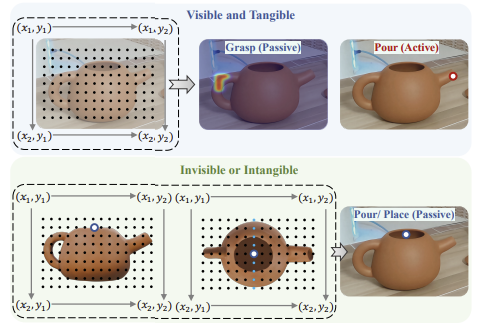
- interaction points는 Visible/Tangible, Invisible/Intangible로 구분됨
- VLM이 interaction points grounding을 더 잘하게 하기 위해서 Cartesian grid를 image에 overlay하 SCAFFOLD visual prompting mechanism를 사용
- visible point는 이미지에서 추출되고, invisible points는 canonical object representations에 기반한 multi-view reasoning으로 추출
- primary viewpoint에서 위치 추론 ambiguity가 있으면 orthogonal view로 전환하여 다시 추론
- Grasping task의 경우 interaction point를 단일 point로 고정하지 않음. 여러 interaction point로부터 heatmap 생성
Sampling Interaction Direction
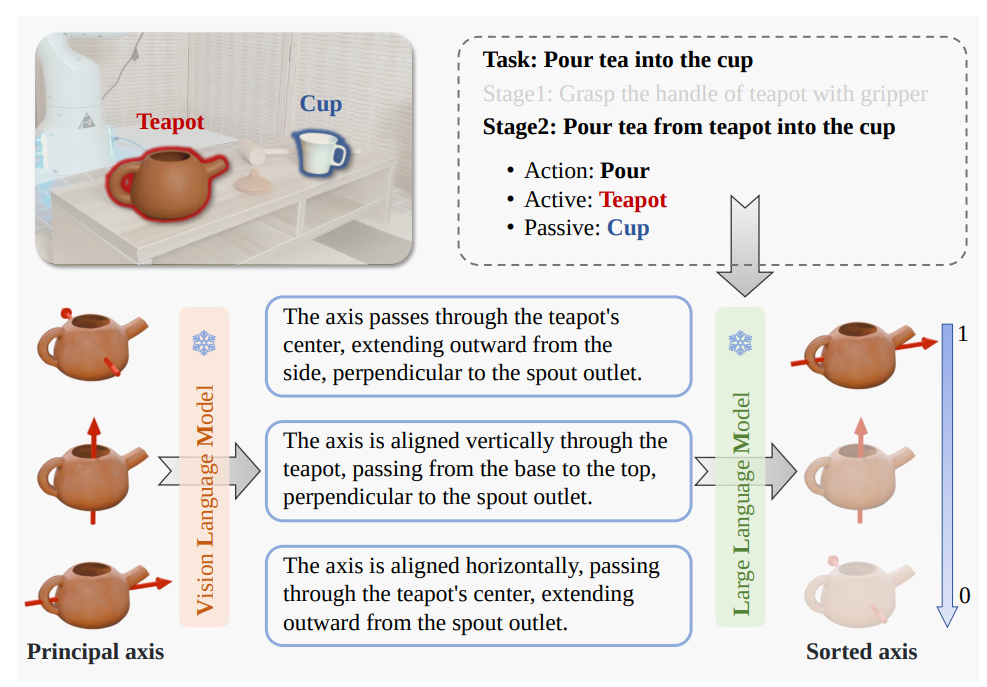
- object canonical space의 principal axes를 candidate interaction directions로 사용
- VLM은 공간을 이해하는데 한계가 있기 때문에 task와 direction의 관계를 평가하는데 한계가 있음. VLM caption + LLM scoring을 이용해서 해결하고자 함
- VLM captioning: 각 candidate axis에 대해 VLM이 semantic description 생성
- LLM scoring: LLM이 task description을 참고하여 각 axis 설명이 task에 얼마나 relevant한지 score 부여
- candidate interaction directions가 relevance 기준으로 정렬된 리스트로 출력됨. task에 가장 적합한 direction이 상위에 위치. 각 stage마다 ordered list of constrained interaction primitives 생성
- : 하나의 interaction primitive + spatial constraint
3.3. Dual Closed-Loop System
- Sec. 3.2까지에서 얻은 것은 interaction primitives , , spatial constraints . 하지만 이것은 open-loop inference(한 번 추론하고 끝나는 결정) 결과
- open-loop는 Large model hallucination, Real-world environment의 dynamic nature 라는 한계점을 가짐. 이 두 문제를 해결하기 위해 dual closed-loop system을 제안
Closed-loop Planning
- interaction primitive 및 constraint 선택 과정에서 hallucination 및 부정확한 primitive를 사전에 걸러냄
- Resampling, Rendering, and Checking (RRC)은 VLM을 evaluator로 사용하는 self-correction loop
- RRC process는 2개의 stage로 구성됨
- initial phase
- Sec. 3.2에서 생성된 constraint 후보 리스트 는 interaction point, interaction direction,distance / angle constraint 를 포함하고 있음
- constraint에 대해서 에 대해서 현재 constraint 를 적용한 interaction 장면 이미지 를 렌더링
- VLM에 task , stage , rendered image , constraint 를 입력. VLM이 success, failure, refinement 세 가지 중 하나를 return
- success: contraint accepted , task 진행
- failure: 다음 contraint가 평가됨
- refinement: refinement phase로 진입
- refinement phase
- functional / geometric axes of objects 간의 misalignments를 수정하기 위해서 예측된 interaction direction v_i의 주변에서 6개의 refined direction 를 uniform sampling으로 생성
- 새 direction들을 포함한 constraint들을 다시 평가
- initial phase
Closed-loop Execution
- 목표는 end-effector의 target pose 의 loss를 minimize하는것
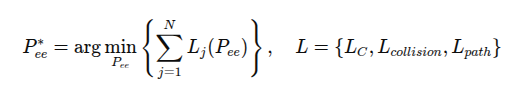
- constraint loss

- 현재 active object와 passive object의 spatial relationship이 원하는 constraint C에서 얼마나 벗어났는지를 측정
- : end-effector pose → active object pose 변환 함수
- collision loss

- end-effector가 환경 내 obstacle 와 최소 안전 거리 보다 가까워지면 penalty 발생. 충분히 멀면 loss = 0
- path loss

- 현재 에서 새 pose 로 갈 때 translation 변화량, rotation 변화량 이 너무 크지 않도록 제한
- constraint를 만족하면서 collision을 피하고 motion을 부드럽게 유지하도록 end-effector pose 를 계속 조정
- constraint loss 로 interaction primitives와 spatial constraints를 통해서 end-effector pose를 최적화 할 수 있지만, 해당 수식은 환경이 static이라고 가정한 것임. 실제는 물체가 움직여서 grasp pose가 변할 수 있음
- 이러한 문제를 해결하기 위해 off-the-shelf 6D object pose tracking algorithm 사용하여 active object pose , passive object pose 를 실시간으로 계속 업데이트
- object pose가 바뀌면 collision loss 값이 바뀌고 그에 따라 end-effector의 target pose도 다시 계산
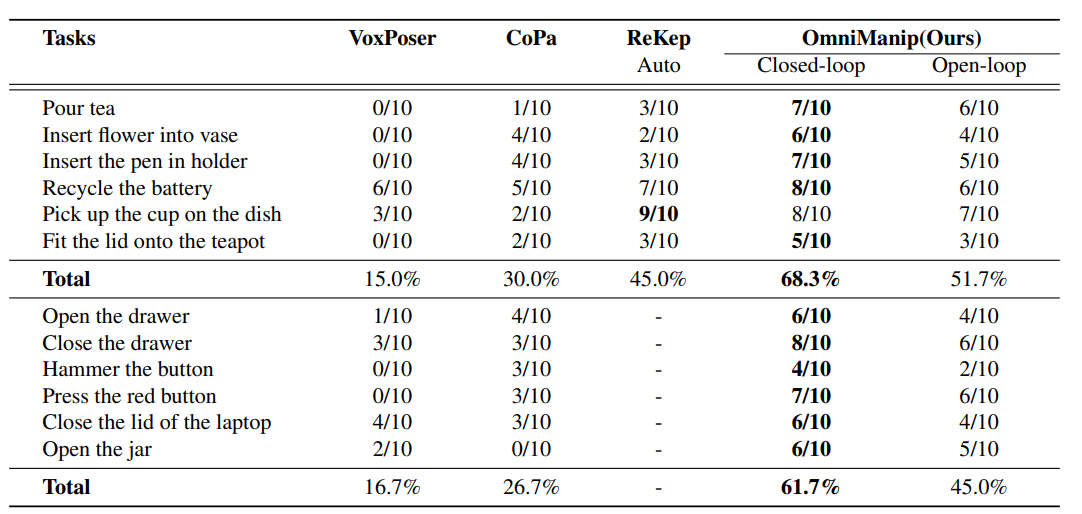
4. Experiment